Shareholder Payout: What It Is and How It Affects Your Investments
When a company makes money, it doesn’t always keep it. A shareholder payout, the way companies return profits directly to investors is one of the clearest signals that a business is healthy and thinking long-term. This isn’t just about dividends—it includes stock buybacks, special distributions, and other cash returns. If you own shares, this is how you actually get paid for taking risk. Most people think stock price is everything, but the real long-term wealth builders are companies that consistently put money back in your pocket.
There are two main ways companies do this: dividends, regular cash payments per share and stock buybacks, when companies buy their own shares to reduce supply and boost value. Dividends give you cash you can spend or reinvest. Buybacks don’t put money in your hand, but they make each share you own worth more by reducing the total number out there. Both are forms of shareholder payout, but they work differently. Some companies, like Coca-Cola or Johnson & Johnson, have raised dividends for 60+ years. Others, like Apple or Microsoft, spend tens of billions on buybacks every year. Neither is better—just different. What matters is whether the company can sustain it without hurting growth.
Not every company pays out. Startups and high-growth tech firms often reinvest everything. But if you’re looking for steady returns, especially in emerging markets where volatility is higher, a reliable shareholder payout can be your anchor. It’s proof the company isn’t just chasing hype—it’s making real profits and choosing to share them. Look at the payout ratio: if a company pays out more than 80% of its earnings, it might be risky. If it pays under 40%, it likely has room to grow. And watch for consistency. A single big payout might be a one-time windfall. Five years of steady increases? That’s a pattern.
Here’s what you’ll find in the posts below: real examples of how shareholder payout plays out in different markets, what to watch for when evaluating companies, and how to spot when a payout is sustainable—or a trap. You’ll see how dividend growth beats high current yield over time, how buybacks can hide weak earnings, and why even in frontier markets, cash returns matter more than flashy headlines. No fluff. Just what works.
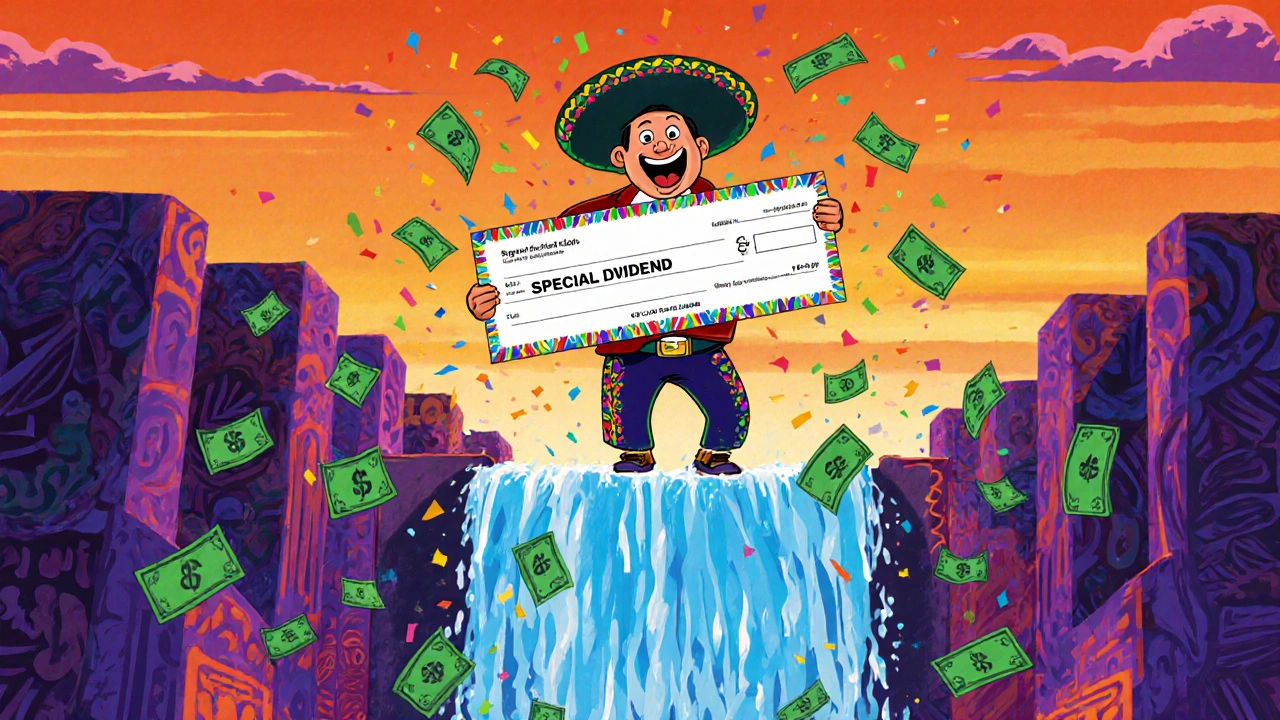
Special Dividends: What One-Time Payments Mean for Your Portfolio
Special dividends are one-time cash payments from companies to shareholders, often triggered by asset sales or record profits. Learn what they mean for your portfolio, how they're taxed, and whether they signal strength or weakness.