One-Time Dividend: What It Means and How It Affects Your Portfolio
When a company pays a one-time dividend, a non-recurring cash payment to shareholders that isn’t part of the regular dividend schedule. Also known as a special dividend, it’s often a way for a company to return excess cash—maybe from selling an asset, settling a lawsuit, or having a record-breaking year. Unlike monthly or quarterly dividends, this isn’t a promise. It’s a gift. And gifts like this can change how you think about your holdings.
These payouts don’t come from profits alone. Sometimes they’re tied to special events, like a major asset sale, tax restructuring, or windfall from overseas operations. For example, a tech company might sell a subsidiary and decide to hand the cash directly to investors instead of reinvesting it. Or an energy firm could get a one-time royalty payment and pass it along. The key? It’s not sustainable. That’s why you shouldn’t count on it year after year.
That doesn’t mean it’s meaningless. A one-time dividend, a non-recurring cash payment to shareholders that isn’t part of the regular dividend schedule can be a signal. If a company with a history of steady payouts suddenly gives you extra cash, it might mean they’re confident in their cash flow. But if a struggling company pays a big one-time dividend, it could be a last-ditch effort to keep investors happy before things get worse. Watch what happens after—the stock price often drops by roughly the same amount as the dividend, because the company’s value has decreased by that cash payout.
For your portfolio, this matters. If you’re chasing income, a one-time dividend might look like free money—but it’s not recurring. It won’t help you build long-term passive income like a growing dividend from a company like Coca-Cola or Johnson & Johnson. But if you’re holding for capital gains, that extra cash could be a nice bonus, especially if you reinvest it. And if you’re in a taxable account, remember: you still owe taxes on it, even if it’s not regular.
Some investors confuse one-time dividends with stock splits or bonus shares. They’re not the same. A stock split changes how many shares you own, but not your total value. A one-time dividend puts real cash in your pocket. And unlike dividends from dividend growth stocks, companies that consistently raise payouts year after year to build wealth, this is a single event. No repeat. No guarantee.
What you’ll find in the posts below aren’t theoretical essays. These are real breakdowns from investors who’ve seen the impact of these payouts—how they affect tax bills, how they change portfolio allocations, and how some traders try to game the system by buying right before the ex-dividend date. You’ll see how one-time dividends interact with dividend yield, the annual dividend payment divided by the stock price, used to compare income potential across investments in different sectors, and why some high-yield stocks turn out to be traps when the big payout never comes again. There’s no fluff. Just what actually happens when a company writes you a check you didn’t expect.
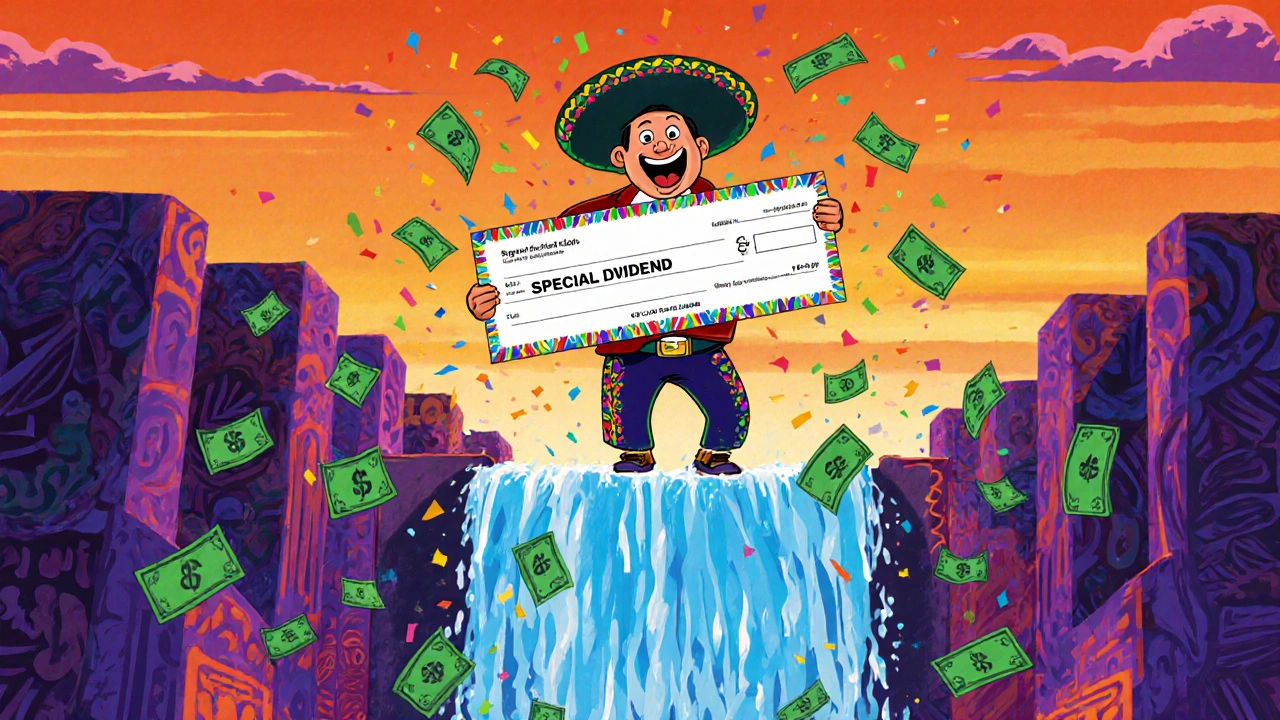
Special Dividends: What One-Time Payments Mean for Your Portfolio
Special dividends are one-time cash payments from companies to shareholders, often triggered by asset sales or record profits. Learn what they mean for your portfolio, how they're taxed, and whether they signal strength or weakness.