App Pricing Strategy: How Fintech Apps Set Fees, Hooks Users, and Stay Profitable
When you sign up for a money app that says "zero fees," it’s not magic—it’s a carefully designed app pricing strategy, a system used by fintech companies to attract users, retain them, and generate revenue through layered monetization methods. Also known as monetization model, it’s what decides whether you pay per transaction, subscribe monthly, or give up your data instead of cash. Most apps don’t make money from you directly—they make it from how you use the app, who else you bring in, and what you don’t notice is being charged.
Take freemium apps, a model where basic features are free but advanced tools require payment. Also known as free-to-start model, it’s everywhere: micro-investing apps let you buy fractional shares for free, but charge for instant cashouts or premium insights. Subscription models, fixed monthly payments for ongoing access, are common in budgeting tools and financial dashboards. You might not mind $3 a month until you realize you’ve paid $36 a year for a feature you never used. And then there’s the hidden layer: BNPL merchant fees, the hidden cost retailers pay to offer "no interest" installments. That 4-6% fee? It’s baked into product prices you pay. Your "free" payment option is funded by higher costs elsewhere.
These strategies aren’t random—they’re built on behavior. Apps know you’ll stick with something free longer than something paid, so they delay the ask. They use trial periods to lock you in before you realize you’re paying. They make upgrades feel urgent with artificial limits: "Only 3 free round-ups this month!" or "Upgrade to unlock real-time alerts." The most successful apps don’t just charge—they create dependency. Your budgeting app tracks your spending, so you can’t easily switch. Your investment app holds your money, so you don’t want to move it. The real cost isn’t the fee—it’s the time and trust you’ve invested.
What you’ll find below are real breakdowns of how these systems work in practice. From how broker cash sweeps earn interest by holding your idle cash, to why commission-based advisors push certain products, to how digital wallets make money from your transactions—each post pulls back the curtain. You’ll see how app pricing strategy shapes your financial choices, often without your awareness. These aren’t theories. They’re patterns you’re already living inside. The goal isn’t to scare you—it’s to help you spot the traps, understand the trade-offs, and choose what actually works for your money—not someone else’s bottom line.
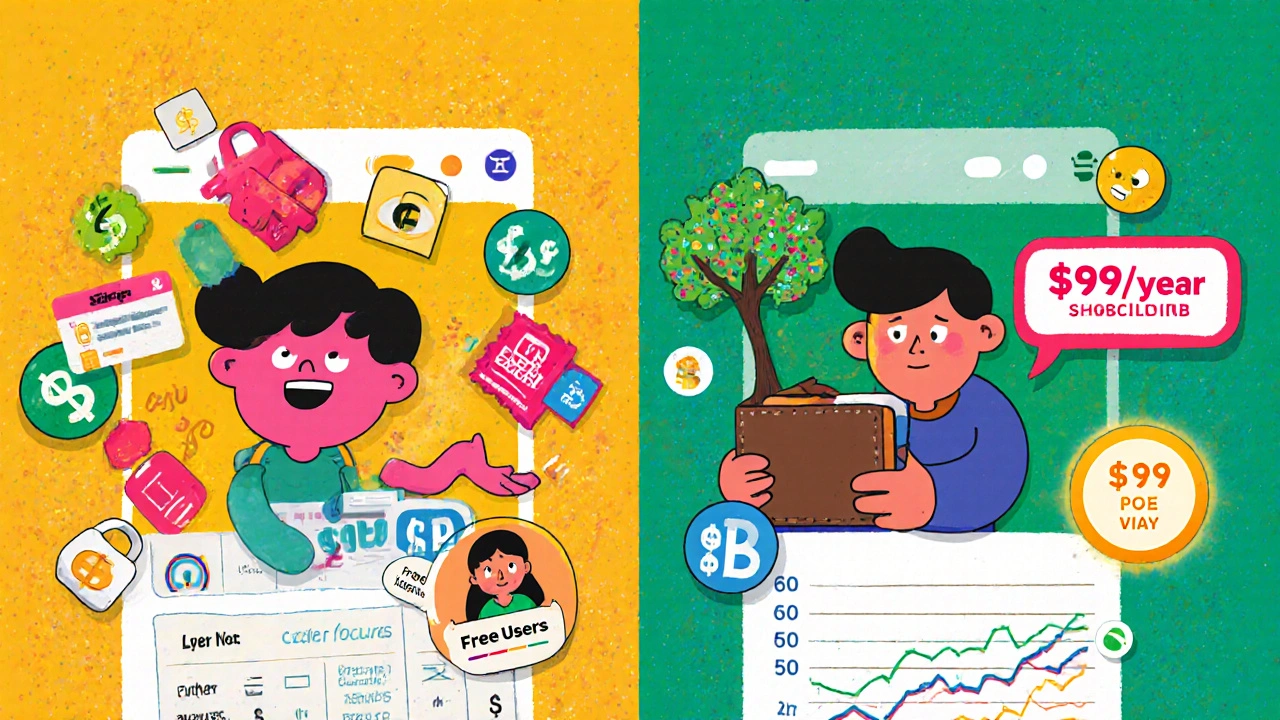
Freemium vs. Paid: Which Monetization Model Works Best for Finance Apps?
Freemium and paid models both have strengths in finance apps, but paid apps win on retention and revenue. Learn which model suits your audience-and why most apps fail trying to do both.