Financial Transaction Cost Calculator
Calculate Your Savings
Compare traditional banking fees versus fintech transaction costs. Based on McKinsey data, fintech reduces costs by 80-90%.
Your Savings
Traditional Banking Fees (8-10%)
$0.00
Fintech Fees (<1%)
$0.00
You save $0.00
*Based on McKinsey data showing fintech reduces transaction costs by 80-90% for international transfers.
Traditional fees average 8-10% while fintech platforms charge less than 1%.
For decades, getting a bank account, a loan, or even sending money to family across borders meant jumping through hoops: paperwork, minimum balances, credit checks, and physical branches you might have to travel hours to reach. That was the reality for 1.7 billion adults worldwide who were locked out of the financial system in 2017. Today, that’s changing-not because banks suddenly became more generous, but because a new wave of technology is rewriting the rules. Fintech isn’t just about apps that let you split dinner bills. It’s tearing down walls that kept millions from ever getting a foot in the door.
What Fintech Actually Does for People Who Were Left Behind
Fintech doesn’t just make banking faster. It makes it possible for people who were never meant to have it. Think about someone in rural Kenya who earns cash selling vegetables at the market. Before mobile money, they kept savings under a mattress. If they needed a small loan to buy seeds, they’d turn to a local loan shark charging 10% interest per week. Now, they use M-Pesa. A few taps on their phone, and they can send money to their child in the city, save for emergencies, or get a microloan approved in 20 minutes. No branch. No collateral. No credit score. This isn’t rare. In Kenya, 76% of adults now use mobile money. In Nigeria, India, and Indonesia, similar stories are playing out. The key? A smartphone and a basic internet connection. That’s it. No $1,500 minimum balance. No 45-minute visit to a bank. No forms in a language you barely understand. Fintech cuts out the middlemen who used to charge $12 a month just to keep your money safe.How It Works: The Tech Behind the Access
It’s not magic. It’s a mix of tools working together. Mobile apps are the front door. Behind them, AI analyzes your spending habits-not to judge you, but to decide if you’re a good candidate for a loan, even if you’ve never had a credit card. APIs let apps talk to each other, so your payroll app can automatically send money to your savings wallet. Blockchain and DeFi let people lend and borrow directly, without a bank as the middleman. And payment systems like India’s UPI let you send money using just your phone number. The cost savings are massive. Traditional wire transfers or cash transfers can cost 8-10% of the amount sent. Fintech platforms bring that down to less than 1%. That’s not a small difference-it’s life-changing for someone sending $50 to their family. McKinsey found fintech cuts basic transaction costs by 80-90%. That money stays in people’s pockets.Who’s Winning? Who’s Still Losing?
The numbers show who’s benefiting. In Sub-Saharan Africa, mobile money accounts grew 45% in a single year. In the U.S., neobanks like Chime and Revolut have attracted millions with zero monthly fees, no overdraft charges, and early direct deposit. On Trustpilot, Chime has a 4.7/5 rating from over 38,000 users-mostly because people are tired of being nickel-and-dimed. But it’s not universal. Women in low-income countries are still less likely to use mobile money than men. Only 35% of women in these regions use it, compared to 45% of men. Why? Digital literacy. Many women don’t know how to use smartphones for finance, or they’re not allowed to own one. In Sub-Saharan Africa, only 42% of adults can do basic financial tasks on their own. And it’s not just about access-it’s about reliability. In rural areas, 4G coverage is spotty. One UNCTAD survey found nearly half of mobile money users in Africa had transactions fail during network outages. And while fintech makes it easy to send money, it’s still hard to get insurance, retirement plans, or business loans beyond small amounts. Only 32% of fintech platforms offer retirement tools, while 89% of traditional wealth managers do.
The Hidden Risks: Speed Isn’t Always Safe
Fintech moves fast. Too fast, sometimes. DeFi platforms let anyone lend crypto and earn interest. Sounds great-until you lose 30% of your savings because a smart contract got hacked. The SEC found 97% of DeFi protocols lack basic compliance protections. There’s no FDIC insurance. No customer service line. No recourse if something goes wrong. Identity verification is another bottleneck. One in three failed sign-ups is because users can’t prove who they are-especially in places without government-issued IDs. Onfido reports 37% of onboarding attempts fail here. And while apps like UPI in India solved this by linking to Aadhaar IDs, most countries haven’t built that infrastructure yet. Then there’s the regulatory gap. Countries like the U.S. and EU are catching up with rules, but in places where fintech is growing fastest, oversight is still weak. That’s why fraud losses hit $42 billion in 2022. The technology is powerful-but without guardrails, it can hurt the very people it’s meant to help.What’s Next? Embedded Finance and CBDCs
The next wave isn’t just apps. It’s finance built into everyday apps you already use. Uber can now offer driver loans. Amazon can let small sellers get cash advances before their sales settle. This is called embedded finance-and by 2026, it’ll be a $138 billion market. Central Bank Digital Currencies (CBDCs) are another big shift. Over 130 countries are exploring them. If designed right, a digital dollar, peso, or naira could be as easy to use as cash, but traceable and secure. Imagine a government sending disaster relief directly to your phone-no middlemen, no delays. That’s the promise. But it’s not guaranteed. The World Economic Forum says fintech could bring formal financial services to 1.2 billion more people by 2030. But only if we fix the gaps: broadband access (only 55% globally), digital education, and smart regulation that doesn’t stifle innovation but protects users.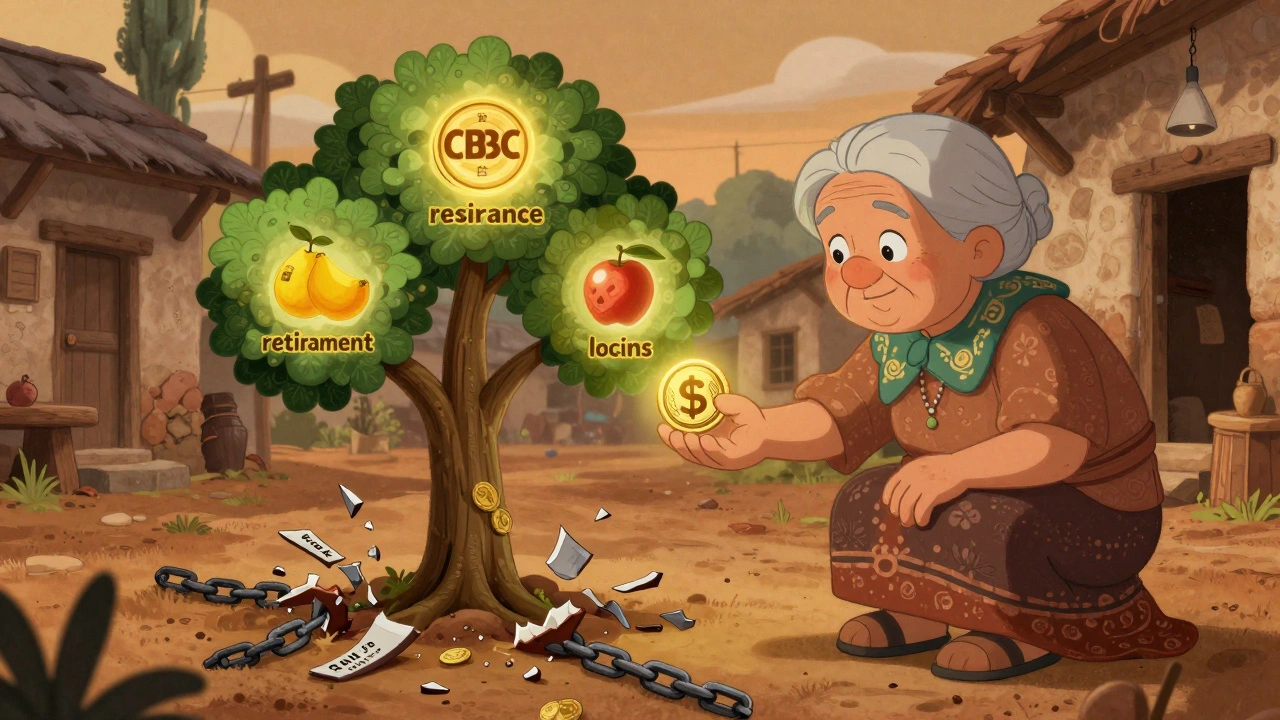
John Weninger
December 10, 2025 AT 12:03Just saw this post and had to say-this is the kind of stuff that actually matters. I grew up in a small town where the nearest bank was 40 minutes away, and my grandma used to hide cash in her sock drawer. Now my cousin in rural Kenya uses M-Pesa to pay for her kid’s school supplies. No forms. No fees. Just a phone. That’s not innovation-that’s justice.
And it’s not just Africa. My uncle in Mexico sends money home every week via Wise, pays for groceries with a QR code, and even got a tiny loan to fix his motorcycle-all from his old Samsung. Banks didn’t do this. Tech did. And it’s only getting started.
Yeah, there are risks. Scams, outages, bad regulation. But we don’t throw out the baby with the bathwater. We fix the gaps. Better ID systems. More offline options. Digital literacy programs in schools. This isn’t a tech problem-it’s a human one. And we’re finally starting to treat it like one.
Omar Lopez
December 11, 2025 AT 05:48While the sentiment is laudable, the article exhibits a concerning lack of nuance regarding systemic financial infrastructure. The assertion that fintech ‘democratizes’ access conflates accessibility with institutional legitimacy. Mobile money platforms are not banks-they are unregulated payment rails with no FDIC protection, no recourse for fraud, and no capital adequacy requirements. The 80–90% cost reduction cited by McKinsey ignores the externalized costs of cybersecurity, compliance evasion, and consumer exploitation.
Furthermore, the romanticization of M-Pesa and UPI ignores the reality of data extraction: these platforms monetize behavioral data from vulnerable populations without informed consent. The ‘democratization’ narrative is a neoliberal veneer over extractive digital colonialism. One cannot democratize finance by replacing brick-and-mortar gatekeepers with algorithmic ones who operate beyond jurisdictional reach.
Jonathan Turner
December 12, 2025 AT 22:40Oh wow, another ‘fintech is magic’ fairy tale for the woke crowd. Let me guess-next you’ll say Bitcoin is the answer to hunger? No FDIC? No oversight? And you call that progress? In America, we have banks that are federally insured, regulated, and accountable. You want to send money to your cousin in Kenya? Use Western Union. It’s slow, yeah, but at least if it goes wrong, someone’s got a phone number you can call.
And don’t get me started on this ‘women can’t use phones’ nonsense. In the US, women use apps more than men. So why are they ‘left behind’ in Kenya? Maybe it’s culture. Maybe it’s religion. Maybe it’s not tech’s fault-it’s theirs. Stop blaming the system for their lack of initiative.
Also, CBDCs? So you want the government tracking every coffee you buy? Thanks, but I’ll keep my cash under the mattress. At least then I know who’s stealing it.