Embedded Insurance Cost Calculator
Compare Insurance Options
See how embedded insurance compares to traditional insurance for your purchase
Results
Embedded Insurance Cost: $0.00
Traditional Insurance Cost: $0.00
Potential Savings: $0.00
Enter details to see how embedded insurance could save you money.
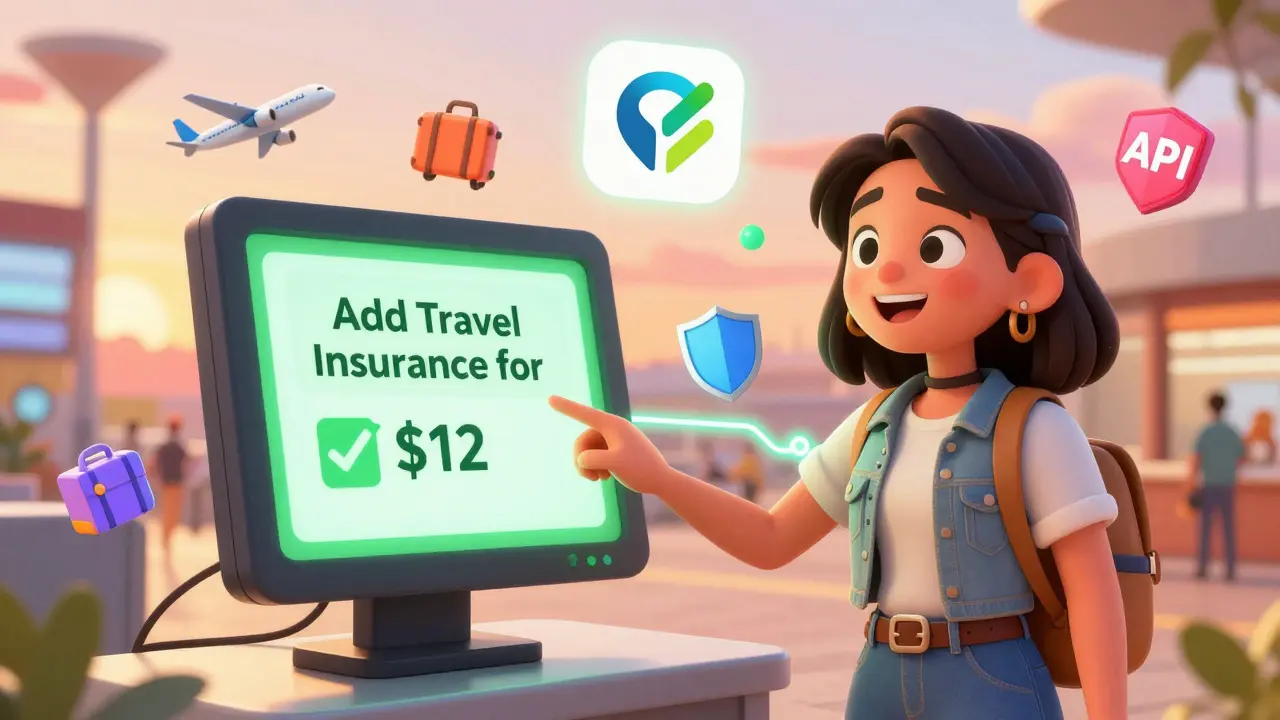
Imagine booking a flight and seeing a simple checkbox: “Add travel insurance for $12”. You click it. Coverage starts instantly. No forms. No calls. No waiting. That’s embedded insurance-and it’s changing how we think about protection.
It’s not new. But it’s everywhere now. You see it when you buy a smartphone and get a screen repair plan. When you rent a car and get collision coverage added to your checkout. When you order a laptop online and are offered theft protection before you hit “pay.” This isn’t upselling. It’s integration. Insurance is no longer something you hunt for after the fact. It’s built into the experience-right where you need it.
How Embedded Insurance Actually Works
At its core, embedded insurance uses APIs to connect a business’s digital system-like an e-commerce site, car dealership portal, or flight booking engine-with an insurance provider’s underwriting engine. When you enter your name, age, location, or payment details, that data flows securely to the insurer. In seconds, they calculate a price, generate a policy, and bind coverage-all without you leaving the original screen.
Take a real example: If you’re buying a new electric SUV from Tesla’s website, their system might pull your zip code, driving history (if you’ve consented), and payment method. Then, using a partner insurer’s API, it instantly shows you a quote for comprehensive coverage that includes battery degradation protection. You accept. Done. No separate policy number. No email follow-up. It’s all tied to your purchase.
This isn’t magic. It’s technology. Cloud-based platforms like Sure, Embed, and Slice handle the heavy lifting: real-time underwriting, compliance checks (GDPR, CCPA), and policy issuance. The whole process takes 4 to 8 weeks to set up for most businesses with existing digital infrastructure. For the customer? It takes 3 seconds.
Why It’s So Much More Effective Than Traditional Insurance
Traditional insurance has a massive problem: conversion rates. Most people don’t buy policies they don’t need right now. Even if they know they should, the process is clunky. You have to research, compare, fill out forms, call agents, wait for quotes. The average conversion rate for standalone policies? Between 5% and 10%.
Embedded insurance flips that. Because it shows up at the moment of decision-when you’re already committed to spending money-you’re far more likely to say yes. Studies show conversion rates jump to 25% to 50%. In travel, 68% of people buy insurance when it’s offered during booking. In electronics, 45% add protection plans. That’s not luck. That’s design.
For insurers, the cost savings are huge. Customer acquisition costs drop by up to 70%. No more billboards, no more Google Ads targeting “best life insurance.” You’re reaching customers exactly when they’re in buying mode. And for businesses? It’s a new revenue stream. A smartphone retailer might earn $15 per device sold with protection, with almost zero extra effort.
Where It’s Already Dominating
Embedded insurance isn’t theoretical. It’s live-and thriving-in specific sectors:
- Travel: Airlines and booking platforms like Expedia and Airbnb now offer embedded policies. Allianz’s partnership with Airbnb led to 85% customer satisfaction-15 points above the industry average.
- Consumer Electronics: Apple, Best Buy, and carriers like Verizon bundle device protection into device sales. 28% of smartphone buyers in 2024 chose embedded coverage, per the Consumer Technology Association.
- Automotive: OEMs like Ford and BMW now offer embedded auto insurance at checkout. 22% of new car buyers in 2024 selected it during financing. Some even include roadside assistance or battery replacement as part of the package.
- Financial Services: Payment processors like PayPal and Stripe now offer embedded fraud protection and account coverage. If you’re paying for a subscription, you can opt into coverage that replaces your payment if the merchant disappears.
Millennials and Gen Z are driving this. 32% of Gen Z users have bought embedded insurance. Only 15% of Baby Boomers have. Why? Because they expect things to just work. If you have to leave the app to get insurance, it feels broken.
The Dark Side: When It Feels Manipulative
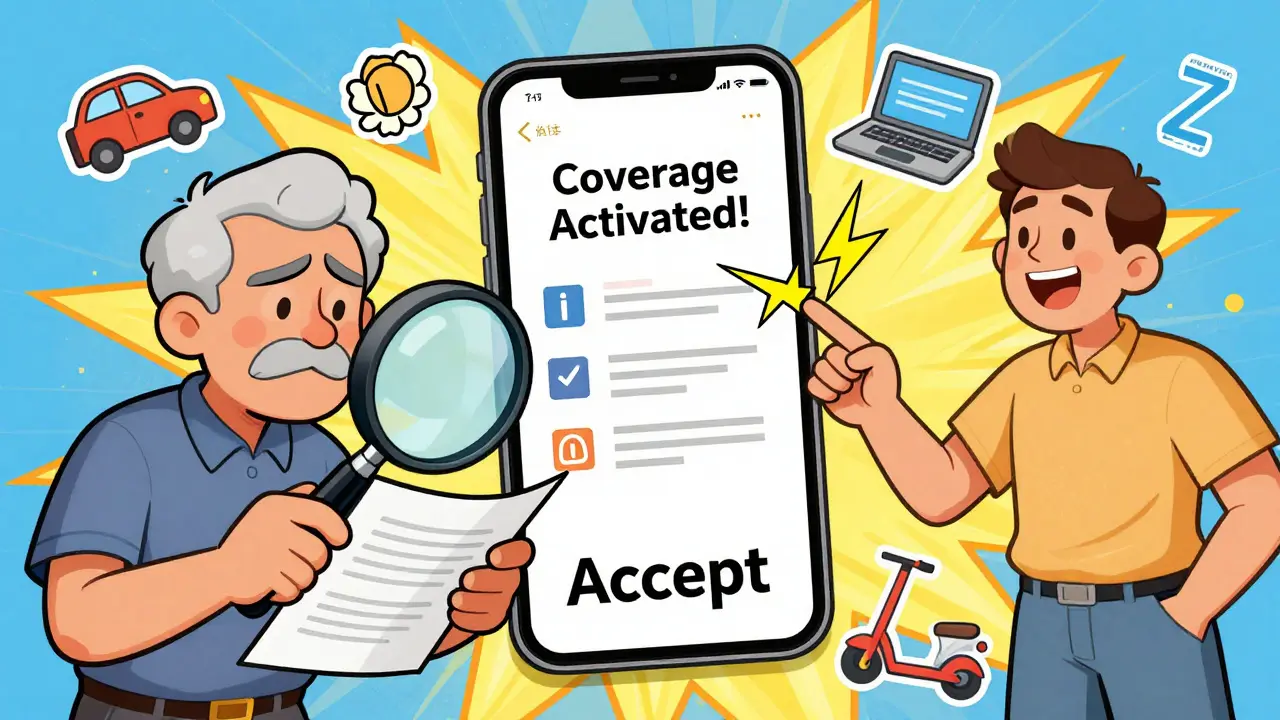
It’s not all smooth sailing. Some companies use dark patterns-design tricks that nudge you into buying without clear consent. Examples:
- Pre-checked boxes that are hard to uncheck
- Confusing language like “recommended” instead of “optional”
- Hidden exclusions (e.g., “coverage doesn’t apply to water damage from leaks”)
One major electronics retailer got hit with a class action lawsuit in 2023 for misleading customers about what their embedded protection plan actually covered. The Consumer Financial Protection Bureau stepped in. Now, regulators are watching.
Trustpilot reviews show mixed results. While 4.2 out of 5 stars is solid, 23% of negative reviews complain about unclear cancellation policies. 19% say they felt pressured during checkout. The key is transparency. Successful programs use clear language: “This adds $15. You can cancel anytime. Coverage ends if you return the product.”
Who’s Winning and Who’s Struggling
The market is split into three groups:
- Insurtechs: Companies like Sure and Embed specialize in plug-and-play insurance APIs. They’re the engines behind most embedded programs.
- Traditional Insurers: Allianz, Chubb, and State Farm are building their own platforms. They’re slow but bring trust and underwriting depth.
- Non-insurance Companies: Uber, Apple, and Amazon are becoming de facto insurers. They don’t need to be experts-they just need to partner with someone who is.
The winners? Those who treat embedded insurance as a service-not a product. Lemonade’s new “Embedded Home+” doesn’t just sell coverage. It uses smart home data to adjust premiums in real time. If your smoke detector goes off, your policy updates. If your thermostat drops below 55°F for 24 hours, you get a warning-and coverage for pipe bursts.
The losers? Companies treating it like a one-time upsell. If you just slap on a $20 plan with no clear value, people will opt out. Or worse-complain later.
The Future: AI, Blockchain, and Dynamic Coverage
What’s next? It’s getting smarter.
- AI-Powered Pricing: By 2026, 45% of embedded programs will adjust premiums based on real-time behavior. Your car insurance might go up if you drive 80 mph on the highway daily. Or drop if you park in a garage.
- Blockchain Claims: 32% of insurers are piloting instant claims using blockchain. No paperwork. No delays. If your phone screen cracks, a photo uploaded during checkout triggers an automatic $100 payout.
- Expanded Use Cases: Health devices now come with embedded insurance. If your glucose monitor fails, you get a replacement. If your wearable stops tracking sleep, you get a refund.
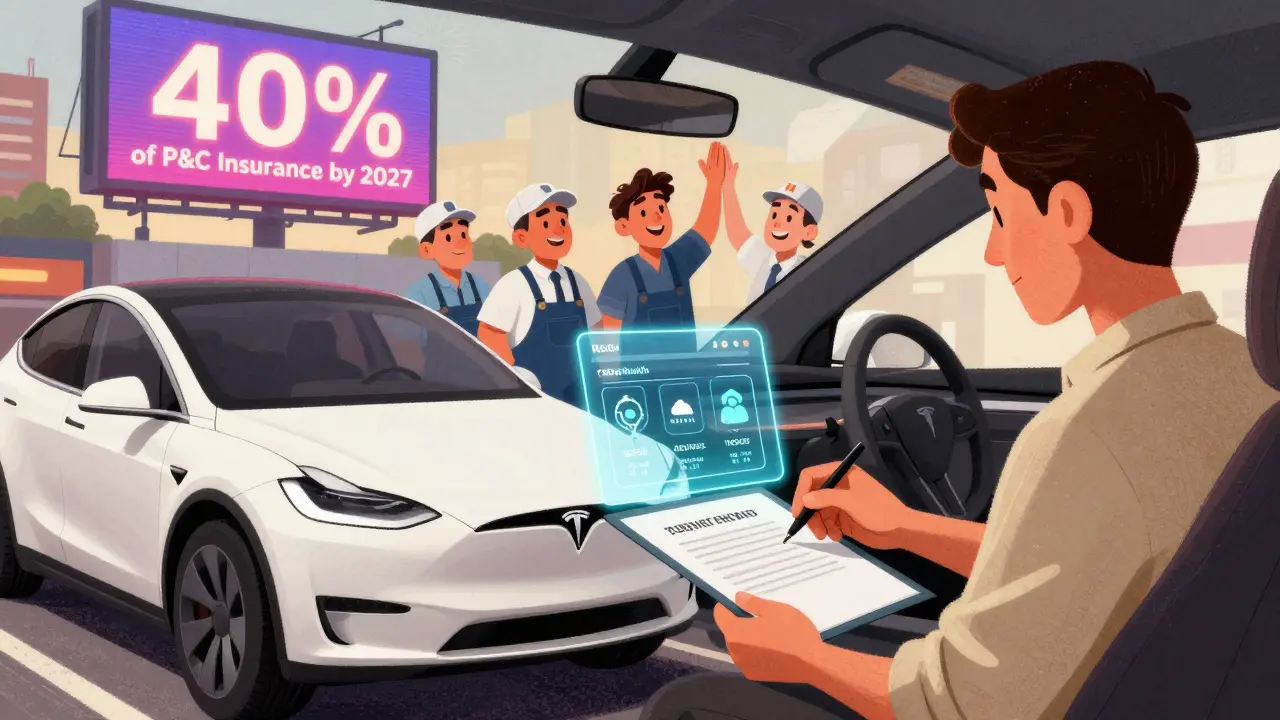
By 2027, Gartner predicts 40% of all property and casualty insurance will be sold through embedded channels. That’s up from 15% in 2023. McKinsey says it could become the dominant sales channel-handling 35-40% of new policies.
But there’s a warning: Bain & Company says if insurers don’t innovate, embedded coverage will become a low-margin checkbox. The real value isn’t in selling insurance. It’s in building trust, reducing risk, and making life easier.
What You Need to Know If You’re Buying It
Here’s how to spot a good embedded insurance offer:
- Is it clearly labeled? “Optional” or “Recommended”? If it says “Included,” ask how.
- Can you cancel? If you return the product, does coverage end? If yes, that’s good.
- What’s actually covered? Read the fine print. If it says “accidental damage only,” don’t assume it covers water or theft.
- Who’s the insurer? Look for a well-known name. If it’s “Partner Insurance LLC,” dig deeper.
- Is claims process clear? Can you file online? Is there a phone number? If not, walk away.
Bottom line: Embedded insurance is here to stay. It’s faster, cheaper, and more convenient than anything we’ve had before. But it’s not perfect. The best version is transparent, easy to cancel, and honestly explained. The worst? A sneaky add-on you didn’t realize you agreed to.
If you’re buying something digital or expensive-especially online-ask yourself: “Does this coverage actually solve a problem I have?” If yes, take it. If it’s just a checkbox you’re clicking to get through checkout? You’re probably better off skipping it.
What exactly is embedded insurance?
Embedded insurance is coverage that’s built directly into the purchase process of another product or service. Instead of buying insurance separately, you’re offered it at the moment you’re already spending money-like when booking a flight, buying a phone, or financing a car. It’s seamless, instant, and tied to the transaction.
Is embedded insurance cheaper than traditional insurance?
Not always. The price depends on the provider and risk level. But embedded insurance often costs less because it cuts out marketing, sales, and administrative expenses. Since it’s sold at the point of sale with minimal overhead, insurers can offer lower prices while still making money. However, some bundled plans include markups-so compare the price to standalone policies if possible.
Can I cancel embedded insurance after I buy it?
Usually, yes-if you return the product or cancel the service. Most embedded policies are designed to end when the underlying purchase ends. For example, if you buy a phone with protection and return it within 30 days, the insurance cancels automatically. Always check the terms, but reputable providers make cancellation easy and transparent.
Is embedded insurance safe with my personal data?
It depends on the provider. Leading platforms use end-to-end encryption, SOC 2 Type II compliance, and ISO 27001 certification. They only share the data needed to underwrite the policy-like your age, location, and payment method. But if you’re unsure, look for the insurer’s name and check their privacy policy. Avoid offers that ask for unnecessary details like your Social Security number.
Why do Millennials buy embedded insurance more than older generations?
Millennials and Gen Z grew up with seamless digital experiences. They expect services to be fast, integrated, and frictionless. Waiting to find insurance after buying something feels outdated. Also, they’re more likely to trust tech companies and apps than traditional agents. For them, insurance isn’t a separate product-it’s just part of the service.
Will embedded insurance replace traditional insurance entirely?
No-not for complex needs. You still need traditional insurance for things like home liability, commercial coverage, or long-term health policies. But for everyday, high-frequency purchases-phones, flights, rental cars, gadgets-embedded insurance is becoming the default. It’s not replacing traditional models. It’s creating a new channel that’s faster, smarter, and more convenient.
Embedded insurance isn’t about tricking you into buying more. It’s about making protection accessible when you actually need it. The future of insurance isn’t in brochures or call centers. It’s in the checkout flow.
Mark Vale
February 10, 2026 AT 02:24Okay but let’s be real-this ‘embedded insurance’ thing is just Big Insurance sneaking in through the back door with a smile and a checkbox. They’re not helping you. They’re harvesting your data, profiling your habits, and locking you into contracts you didn’t even know you signed. I saw a guy get denied a claim because his ‘accidental damage’ coverage didn’t cover ‘water exposure from a leaky roof’-but the form said nothing about roofs. That’s not convenience. That’s exploitation wrapped in UI/UX glitter.
And don’t get me started on pre-checked boxes. I’ve unclicked those things so hard my thumb hurts. If you’re gonna make it this easy, make it *honest*. No hidden clauses. No ‘partner insurer LLC’ nonsense. Name the company. Show the policy. Let me read it before I hit ‘buy.’ Otherwise, this isn’t innovation. It’s a trap.
Royce Demolition
February 11, 2026 AT 20:45YESSSS this is the FUTURE 🚀💥
Imagine buying a laptop and getting instant protection-no forms, no waiting, no crying in customer service lines 😭
Embedded insurance = peace of mind on steroids 💪
Stop overthinking it. If it saves you time, money, and stress? TAKE IT. This isn’t upselling-it’s UPGRADE. Apple, Tesla, Uber? They’re not trying to scam you. They’re trying to *care* for you. And honestly? I love it. 🤝📱
Sabrina de Freitas Rosa
February 12, 2026 AT 22:04Oh honey. You think this is convenient? Nah. This is how they get you. 🤭
You buy a $1200 phone, they slip in $15 ‘protection’ like it’s a free candy at the checkout. You say yes because you’re tired. You’re distracted. You just wanna go home.
Then your screen cracks. You file a claim. They say ‘oh wait, this doesn’t cover drops from more than 3 feet’-but the tiny print? Yeah, it was there. You didn’t read it. You never do.
And now you’re out $1200. Congrats. You paid for a trap.
Don’t be a sucker. If it’s not clearly spelled out in plain English with no fine print? Walk away. Plain and simple.
Erika French Jade Ross
February 14, 2026 AT 01:33But yeah, the dark patterns? Ugh. I’ve seen ‘recommended’ boxes that look like they’re mandatory. That’s not cool.
Good embedded = clear, cancelable, simple. Bad embedded = sneaky. We can do better.